SKU: OT3572 Article number: AE169 EAN: 8720618690722
We love heat shrink tubing. We use it ourselves for all kinds of projects such as reinforcing connections, insulating exposed solder joints from electricity, and protecting projects.
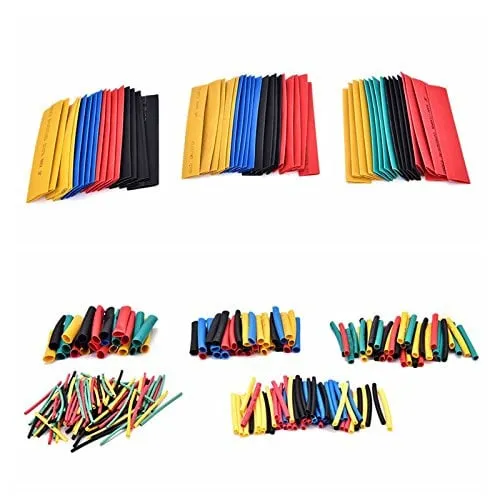
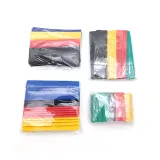
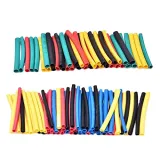
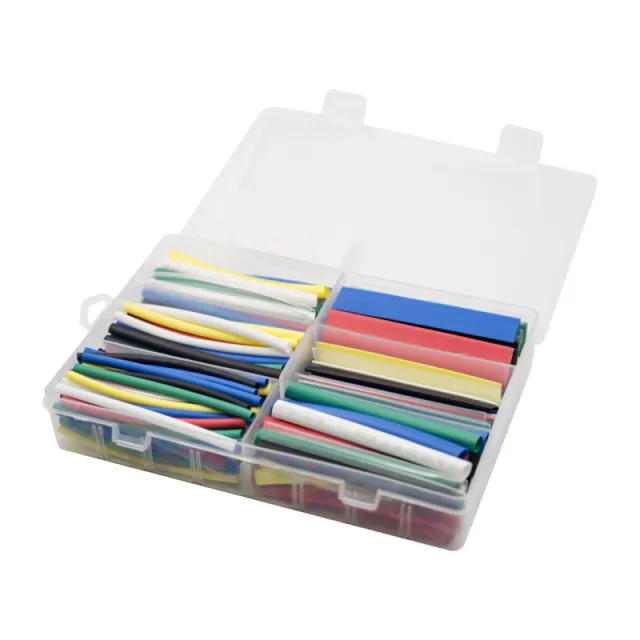
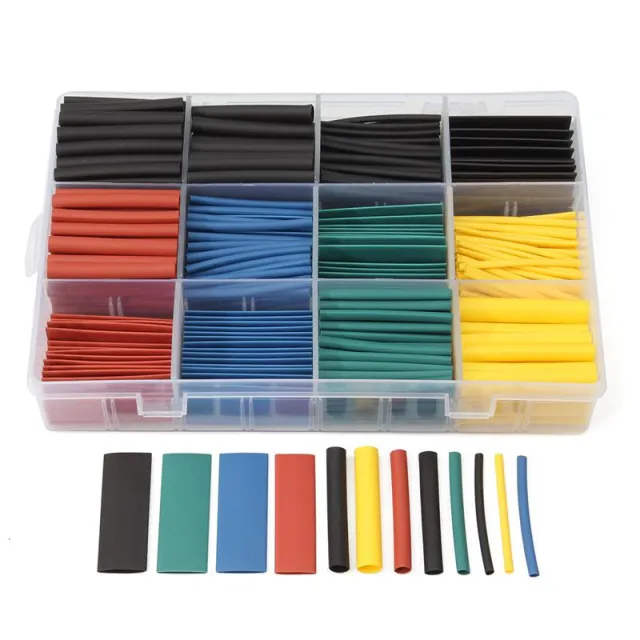
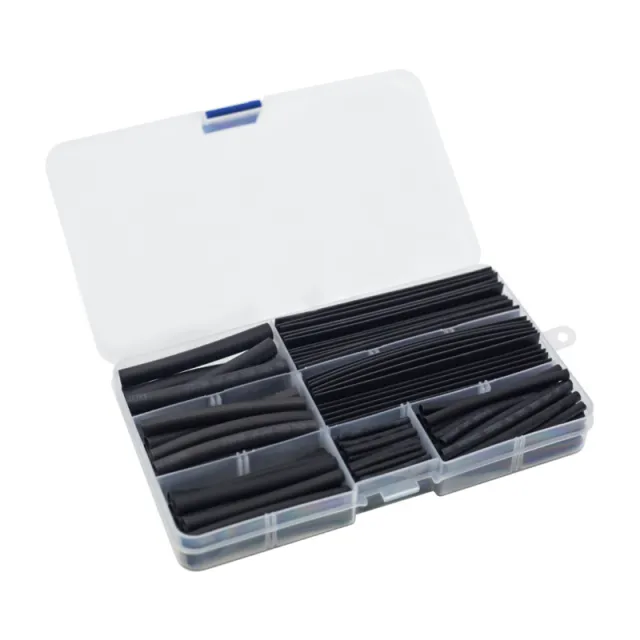
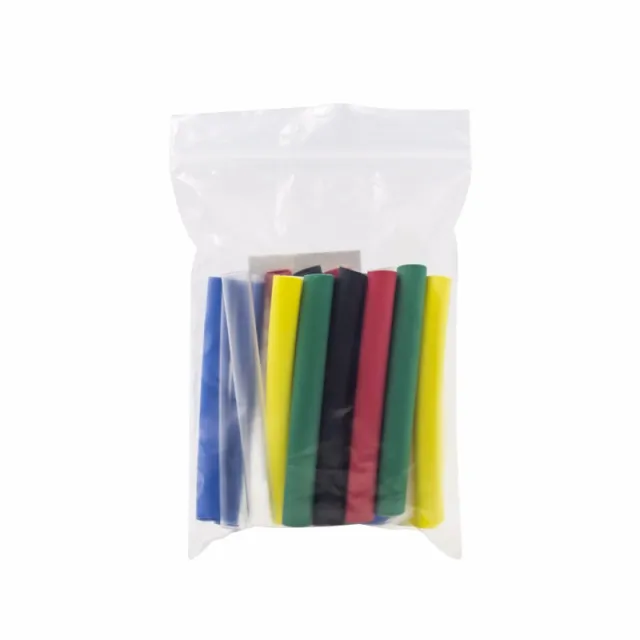
With this large collection, you’ll be set for a while! Many different colors and diameters, packed in transparent bags.
Set contains:
(Quantity x supplied internal diameter x single length)
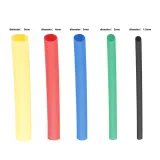
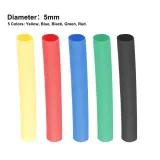
ø1.0 x 40 mm - 120 pieces (yellow, black, red, green)
ø 2.0 x 40mm - 60 pieces (yellow, black, red, blue)
ø 3.0 x 40mm - 32 pieces (yellow, black, red, green)
ø 4.0 x 40 mm - 32 pieces (yellow, black, red, blue)
ø 6.0 x 40 mm - 32 pieces (yellow, black, red, green)
ø 8.0 x 80mm - 20 pieces (yellow, black, red, blue)
ø 10.0 x 80 mm - 16 pieces (yellow, black, red, green)
ø 14.0 x 80 mm - 16 pieces (yellow, black, red, blue)
Material: Polyolefin
Shrink ratio: 2:1 (shrinks up to 1/2 of the supplied diameter)
Operating temperature: -55 °C to +125 °C
Minimum shrink temperature: +70°C
Full shrink temperature: +110°C Max
Tensile strength: 10.4 Mpa
Dielectric strength: 15 kV/mm
Flame retardant
UL approved
Heat shrink tubing is widely used to provide wires and cables with insulation and protection. Thanks to its many favorable properties, there are multiple possible applications. For example, you can cover wire harnesses and organize and protect components. Heat shrink tubing has various functions and purposes that can improve the performance, durability, and maintenance of products.
Heat shrink tubing covers and encloses a collection of wires, cables, or other components in a protective insulated tube against external interference. Heat shrink tubing uniquely adheres to products and provides a resilient protective shield with properties that withstand harsh environments in which many applications operate.
Whether it’s added value, security, safety, or protection, here are five reasons you might consider using heat shrink tubing in your project:
One of the main advantages of heat shrink tubing is the protection it offers to wires and cables when exposed to various conditions and environments. In factories and plants, wires and cables are subject to wear, abrasion, splitting, and constant wear when exposed. Other factors in manufacturing environments can expose wiring to water or moisture, such as steam, oil, grease, chemicals, and acids. Outdoors, humidity, temperature fluctuations, rain, UV exposure, and environmental conditions in general can damage wiring and cabling. Heat shrink tubing can help ensure the lasting performance of wiring and cables.
Insulation of electrical wires and cables is primarily required to prevent electric shock. However, the insulation of wires and cables also prevents the loss and dissipation of energy conducted through the wiring. The material properties of cable insulators are non-conductive and designed to provide a buffer for anything or anyone that may come into contact with the wiring. Also, a thicker insulation provides greater resistance and better transmission of the energy conducted or information transmitted. Heat shrink tubing adds a layer of insulation to help with resistance and adds another level of safety.
While heat shrink tubing protects wiring and cables from exposure to environmental conditions, it also helps prevent excessive tension or stretching of wires and cables that are limited to insufficient space or length. Heat shrinking increases mechanical support for maintaining the connectivity of wires and cables that would otherwise be exposed to stress and strain that could lead to premature failure.
There may be no better argument for the use of heat shrink tubing on wires, cables, and components than to organize them. Bundling wires and cables is not only aesthetically pleasing, but good cable management ensures easy access during system maintenance.
Over time, in any environment, when oxygen combines with metal, it forms a new compound called oxide, which weakens the bonds of the metal itself, causing it to corrode. Metals and their alloys used in wiring and cable applications can be made corrosion-resistant, but only insulating the material can prevent corrosion. Heat shrink tubing seals perfectly and protects wires and cables from corrosion that can occur due to external interference.