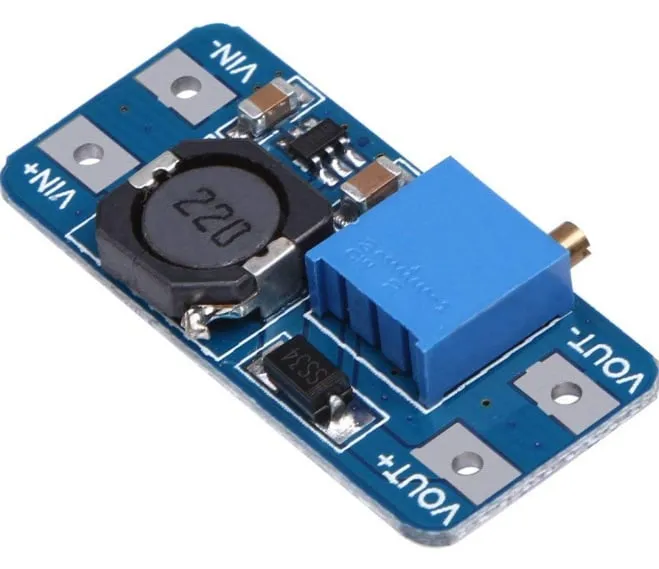
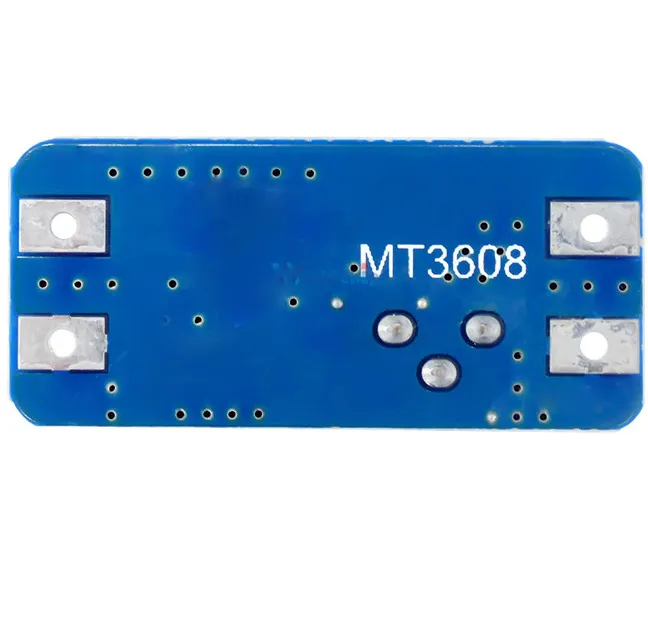
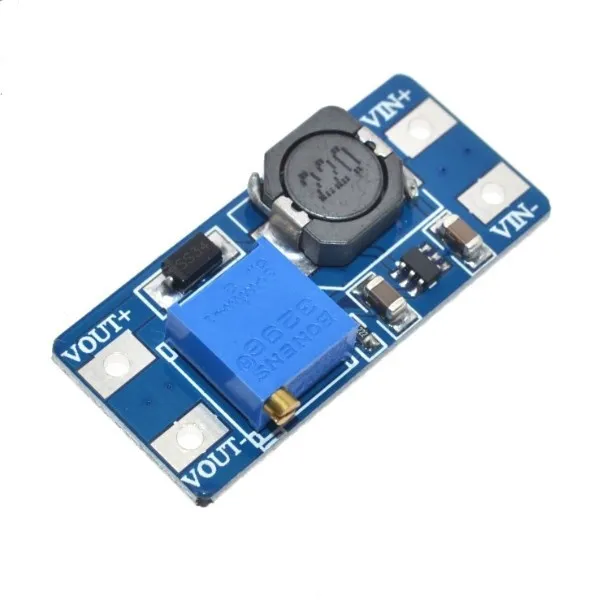
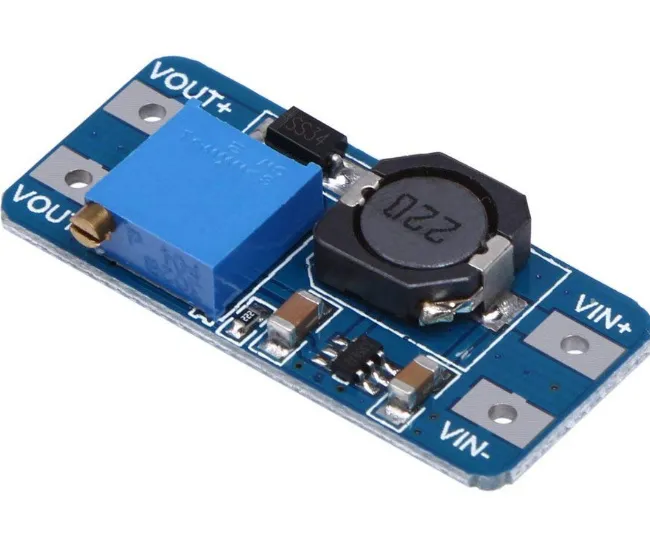
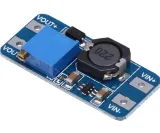
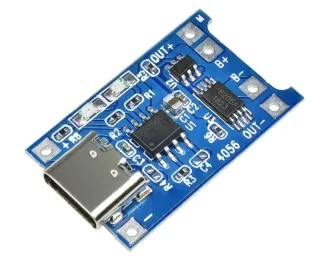
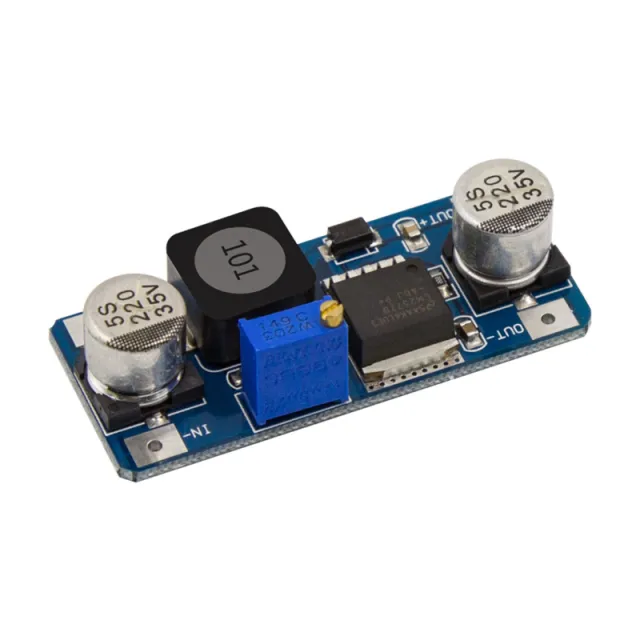
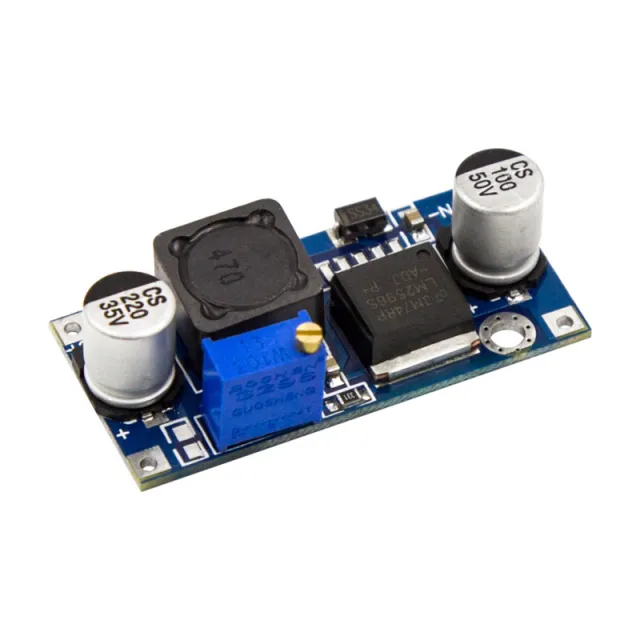
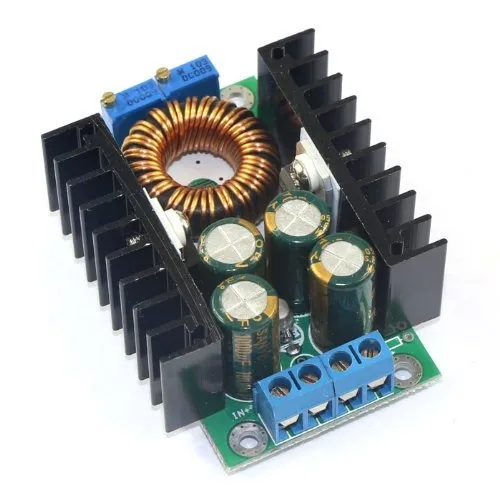
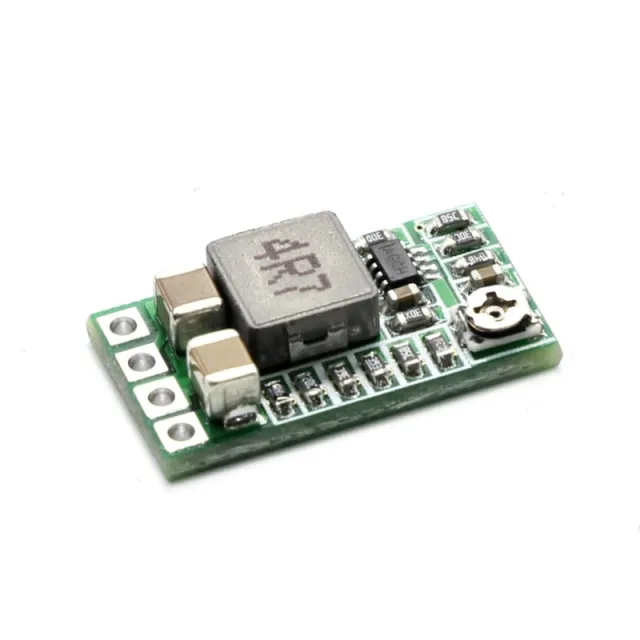
Step-up boost module for increasing DC voltage in electronic projects.
SKU: OT5002 Article number: AA180 EAN: 8720589817654 Location: H05.06
Alternative
Adjustable Step-Up Module 3-34V to 4-35V LM2577 Stabilized
€ 4,15
View this alternative
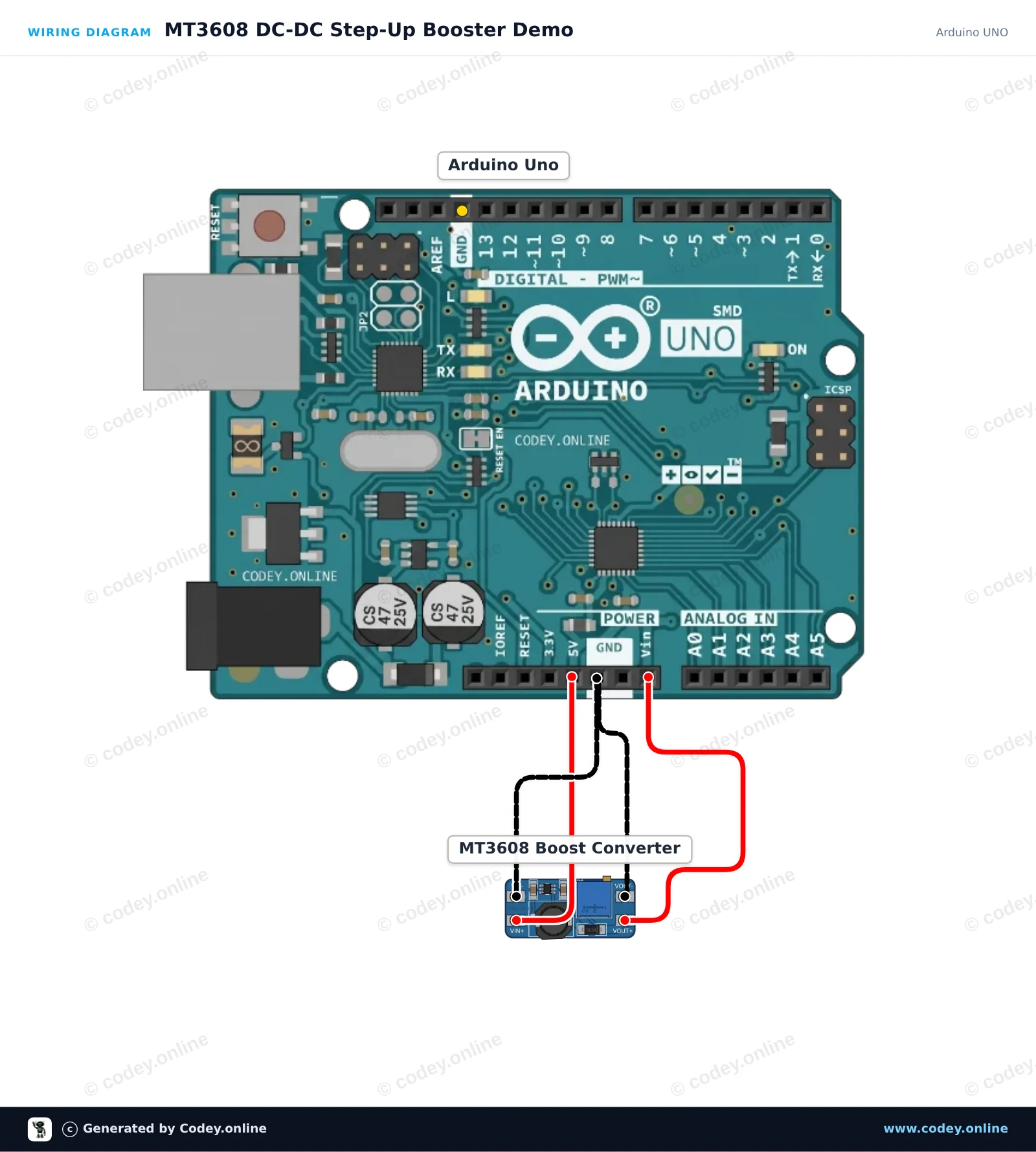
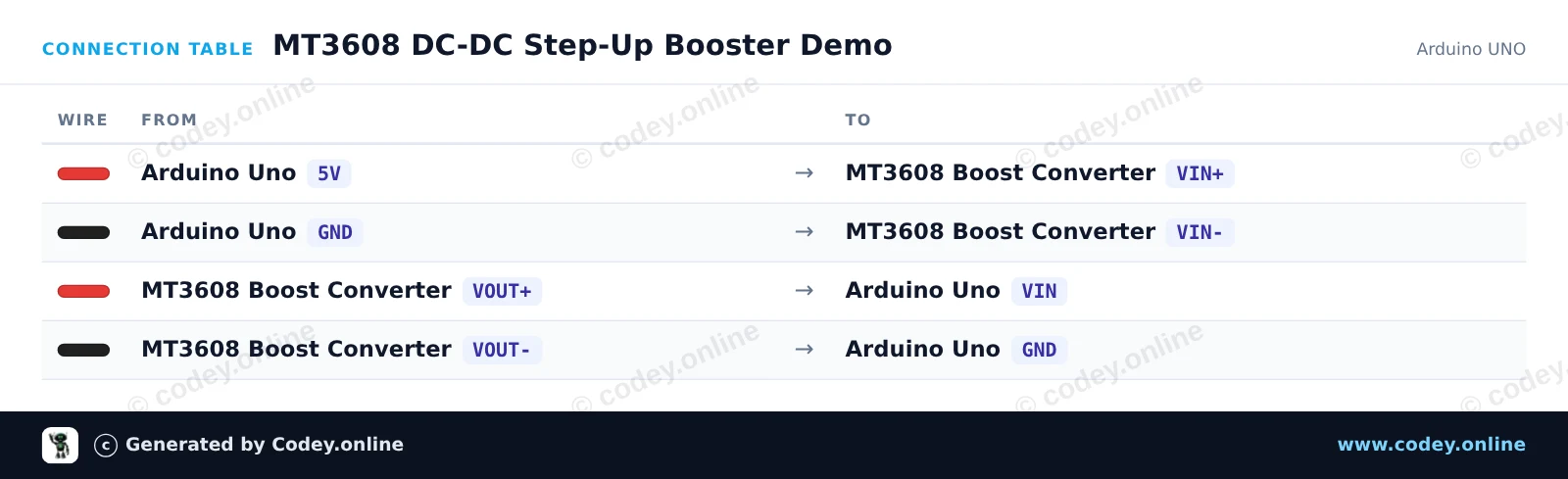
How to connect the MT3608 2A Max DC-DC Step-Up Power Module Booster Power Module to an Arduino UNO or ESP32, with an example sketch you can upload straight away.
This setup demonstrates how to connect the MT3608 step-up boost converter to power and load rails on the Arduino Uno. The module receives 5V from the board and steps it up to an adjustable higher voltage (up to 28V) using its onboard multi-turn potentiometer. Use a multimeter across VOUT+ and VOUT- to set and verify your desired output voltage.
/*
* ==================================================================
* Generated by Codey.online — https://www.codey.online
* ==================================================================
* Project : MT3608 DC-DC Step-Up Booster Demo
* Board : Arduino UNO (arduino:avr:uno)
* Parts : MT3608 2A Max DC-DC Step Up Power Module Booster Power Module
* Libraries : none (built-in)
*
* Codey Online is an AI-powered browser IDE for Arduino and ESP32.
* Describe your project and Codey writes the code, draws the wiring
* diagram and uploads it to your board, straight from the browser.
* This code is free to use, modify and share, without warranty.
* ==================================================================
*/
// MT3608 DC-DC Step-Up Converter Demo
void setup() {
pinMode(LED_BUILTIN, OUTPUT);
Serial.begin(115200);
Serial.println(F("--- MT3608 Boost Converter Demo ---"));
Serial.println(F("Input: Arduino 5V -> VIN+, GND -> VIN-"));
Serial.println(F("Output: VOUT+ / VOUT- provides the boosted DC supply."));
Serial.println(F("Tip: Turn the onboard potentiometer counter-clockwise"));
Serial.println(F(" (often 10-20 turns initially) to step up the output."));
Serial.println(F("Use a multimeter across VOUT+ and VOUT- to calibrate."));
}
void loop() {
// Heartbeat pulse to confirm the board is active
digitalWrite(LED_BUILTIN, HIGH);
delay(500);
digitalWrite(LED_BUILTIN, LOW);
delay(500);
}
Wiring diagram and example code generated by Codey.online — https://www.codey.online
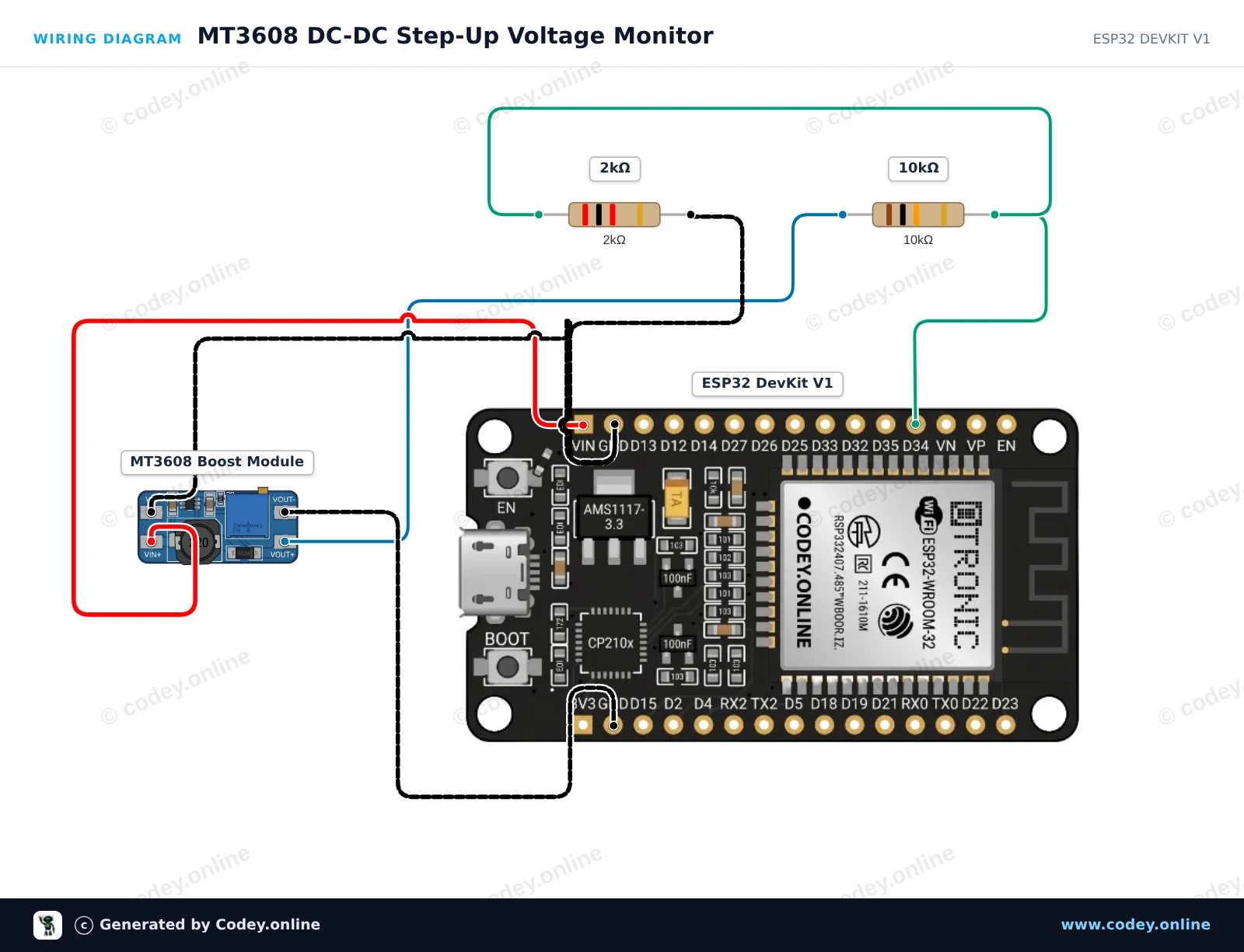
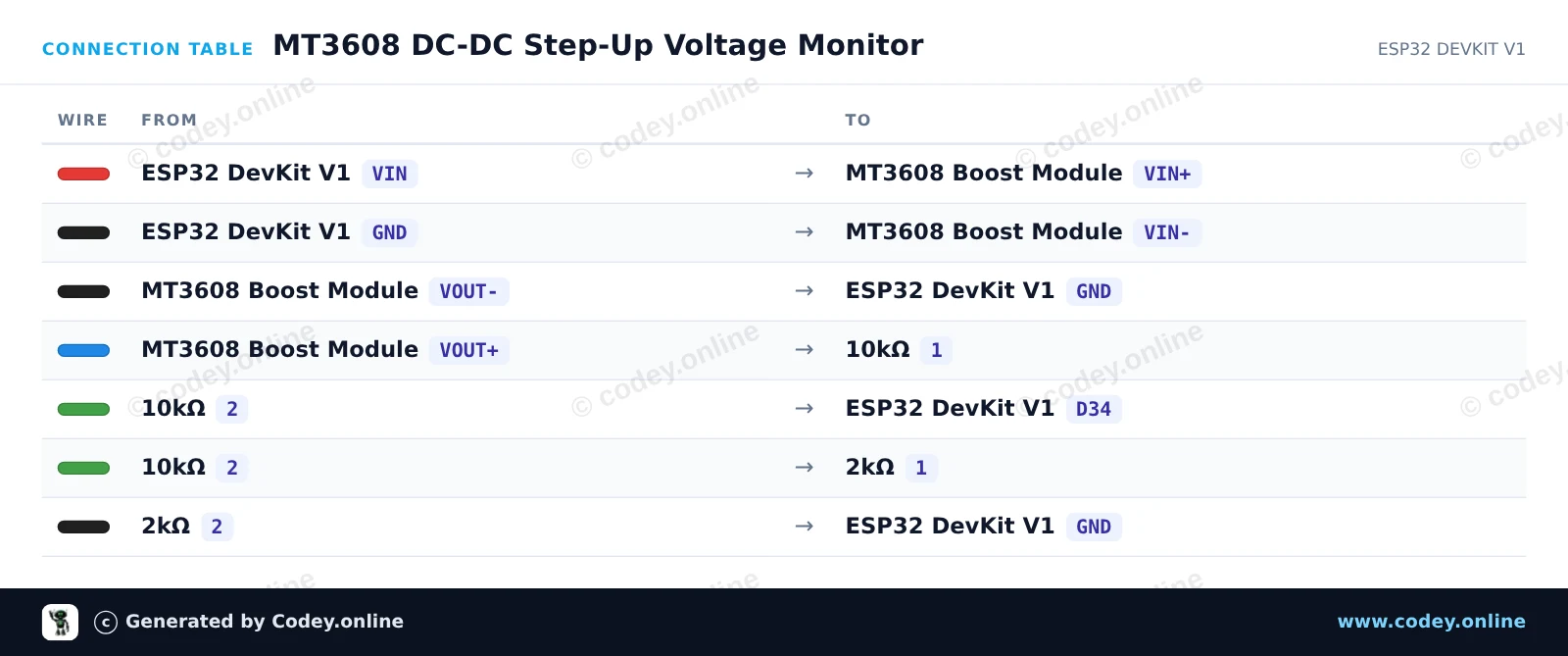
This project powers the MT3608 step-up booster from the ESP32 VIN pin and monitors the boosted output voltage in real time. A two-resistor voltage divider safely scales the high output voltage down to the ESP32 ADC range. Turn the multiturn trimmer potentiometer on the MT3608 to adjust the output and watch the reading update in the Serial Monitor.
/*
* ==================================================================
* Generated by Codey.online — https://www.codey.online
* ==================================================================
* Project : MT3608 DC-DC Step-Up Voltage Monitor
* Board : ESP32 DEVKIT V1 (esp32:esp32:esp32doit-devkit-v1)
* Parts : MT3608 2A Max DC-DC Step Up Power Module Booster Power Module
* Libraries : none (built-in)
*
* Codey Online is an AI-powered browser IDE for Arduino and ESP32.
* Describe your project and Codey writes the code, draws the wiring
* diagram and uploads it to your board, straight from the browser.
* This code is free to use, modify and share, without warranty.
* ==================================================================
*/
const int SENSE_PIN = 34;
const float R1 = 10000.0;
const float R2 = 2000.0;
const float DIVIDER_RATIO = (R1 + R2) / R2;
void setup() {
Serial.begin(115200);
delay(1000);
Serial.println("--- MT3608 Boost Converter Monitor ---");
}
void loop() {
// Read the scaled voltage from the resistor divider
int raw = analogRead(SENSE_PIN);
float pinVoltage = (raw / 4095.0) * 3.3;
float boostVoltage = pinVoltage * DIVIDER_RATIO;
Serial.print("ADC Raw: ");
Serial.print(raw);
Serial.print(" | Boost Output Voltage: ");
Serial.print(boostVoltage, 2);
Serial.println(" V");
delay(500);
}
Wiring diagram and example code generated by Codey.online — https://www.codey.online
Input voltage: 2V-24V DC
Output voltage: 5V-28V DC
Note: This module is not suitable for powering electric motors or coils (solenoids). For that, use a powerful step-up booster module that is equipped with capacitors.
Output current: 1A (max), 0.5A (continuous), <100mA (input <4.0V), <50mA (input <3.5V)
Module type: Non-isolated step-up (boost)
Rectification: Non-synchronous rectification
Conversion efficiency: 96% (highest)
Switching frequency: 1.2MHz
Maximum output ripple: 100mV (factory specification)
Load regulation: ±0.5%
Voltage regulation: ±0.5%
Short-circuit protection: No
Operating temperature: -45°C to +85°C
PCB dimensions: 37 x 17mm
Note: The potentiometer can rotate about 25 times (approximately 50 hand turns) from start to finish. So it may take some time before the desired voltage is reached. The first time, it may happen that many turns are needed to see any change in the voltage at all.
Dimensions
Length: 3.6cm
Width: 1.7cm
Height: 0.6cm

| Width | 1,7 cm |
|---|---|
| Operating temperature | -45°C to +85°C |
| Input voltage | 2V-24V DC |
| Output voltage | 5V-28V DC |
| Length | 3,6cm |
| Type | Non-isolated step-up |
| Height | 0.6cm |
| Output current | 1A (max) |
| PCB dimensions | 37 x 17mm |
| Voltage regulation | ± 0,5% |
| Output ripple | 100mV |
| Tax regulation | ± 0.5% |
| Switching frequency | 1.2MHz |
Does exactly what it should do and is easy to adjust
Not tested yet, but as described.
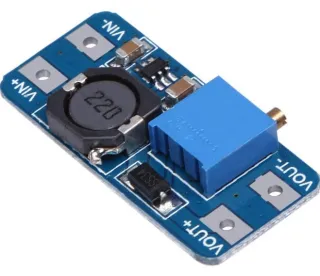
MT3608 2A Max DC-DC Step-Up Power Module Booster Power Module