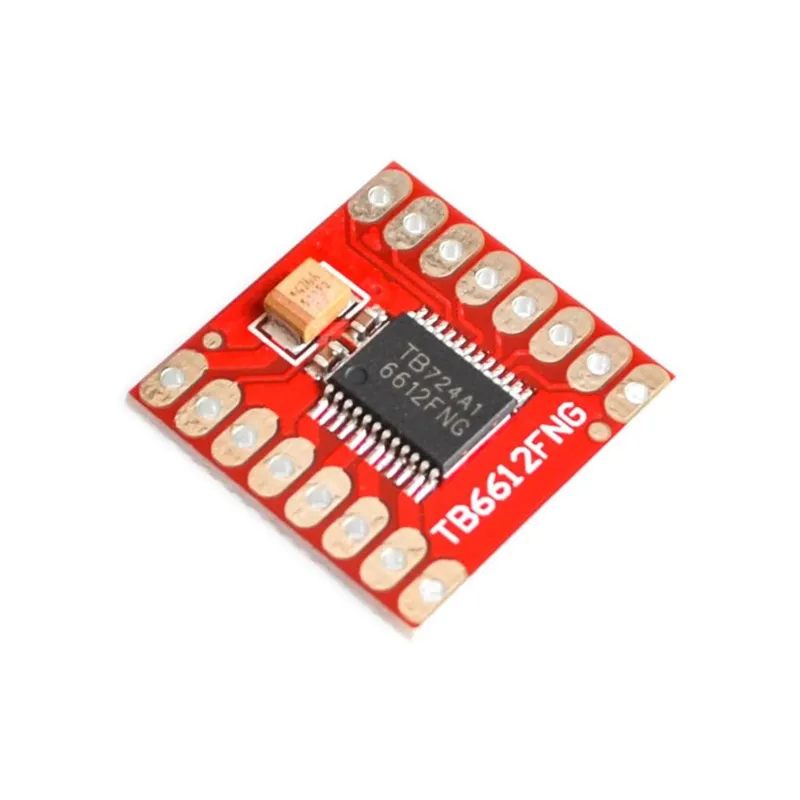
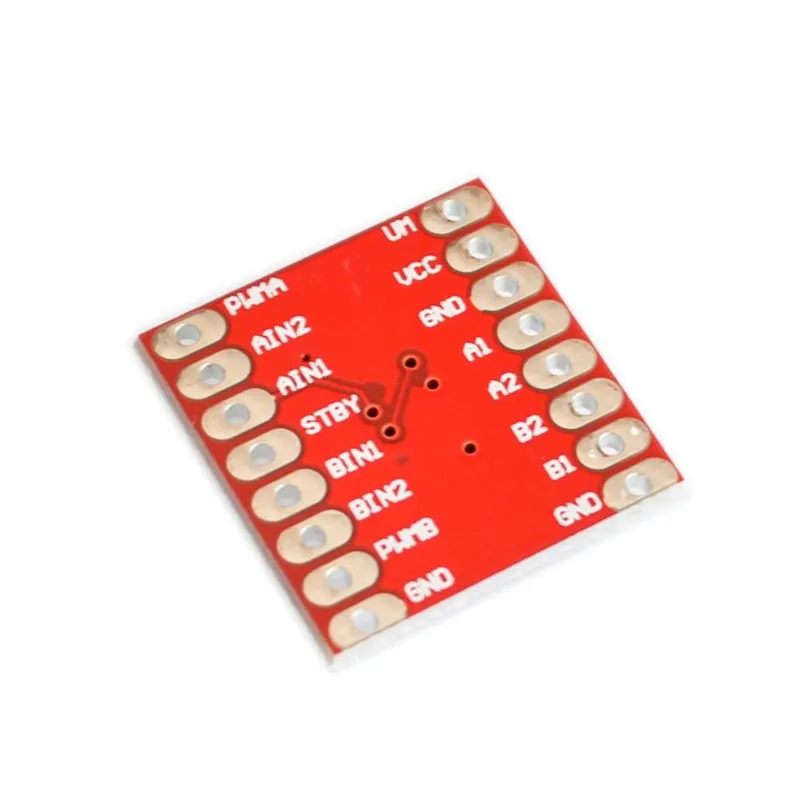
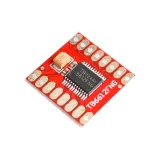
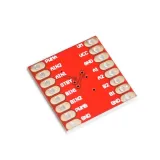
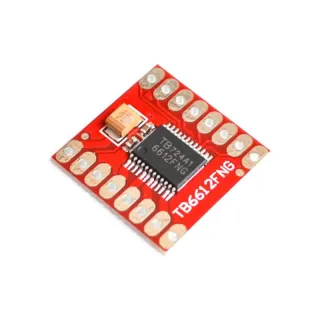
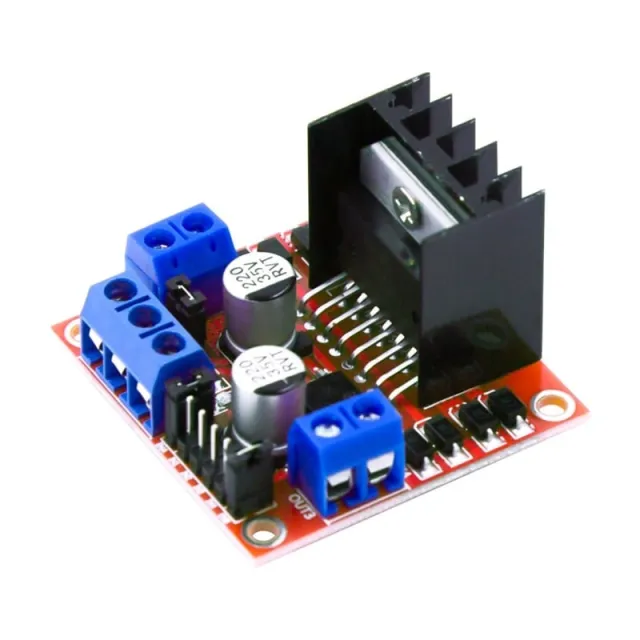
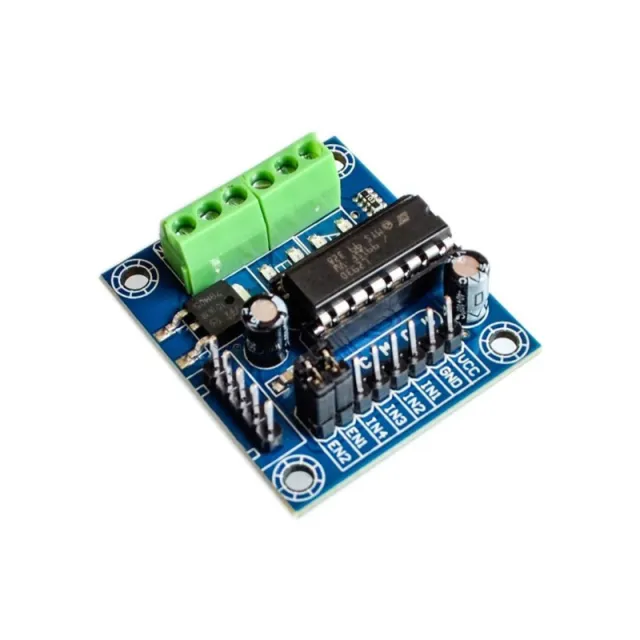
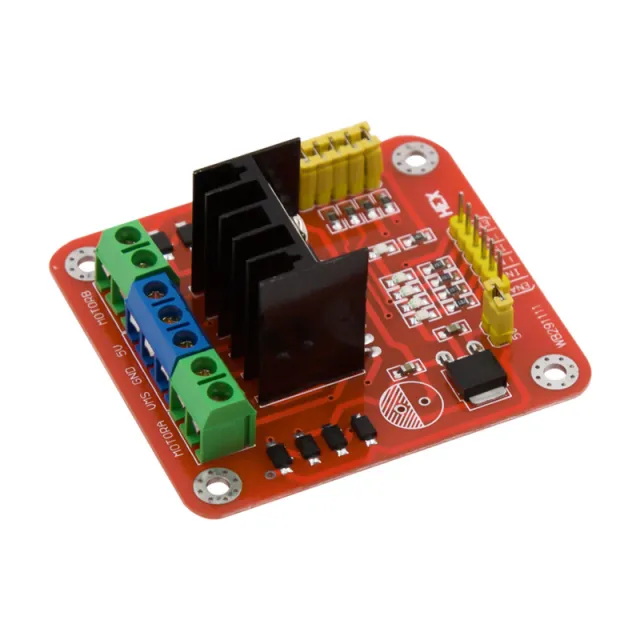
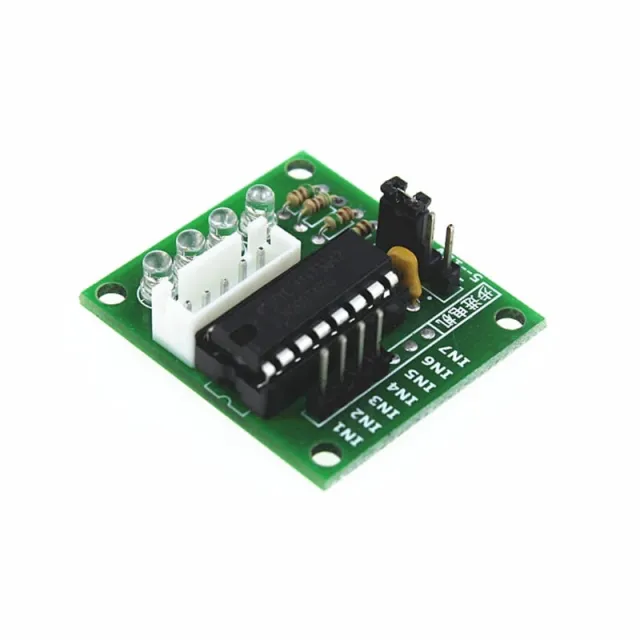
Motor driver for Arduino to control two DC motors with PWM and use standby control.
SKU: OT2065-A44 Article number: NA272 EAN: 8720589817388 Location: AD04.05
Alternative
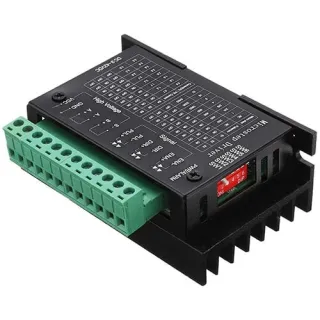
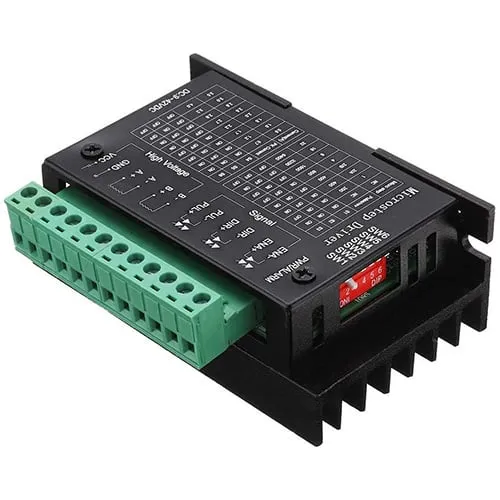
TB6600 Stepper Motor Driver for Nema 17/23/34 | 9-42V 4A
€ 11,95
View this alternative
How to connect the Motor driver module TB6612FNG for Arduino to an Arduino UNO or ESP32, with an example sketch you can upload straight away.
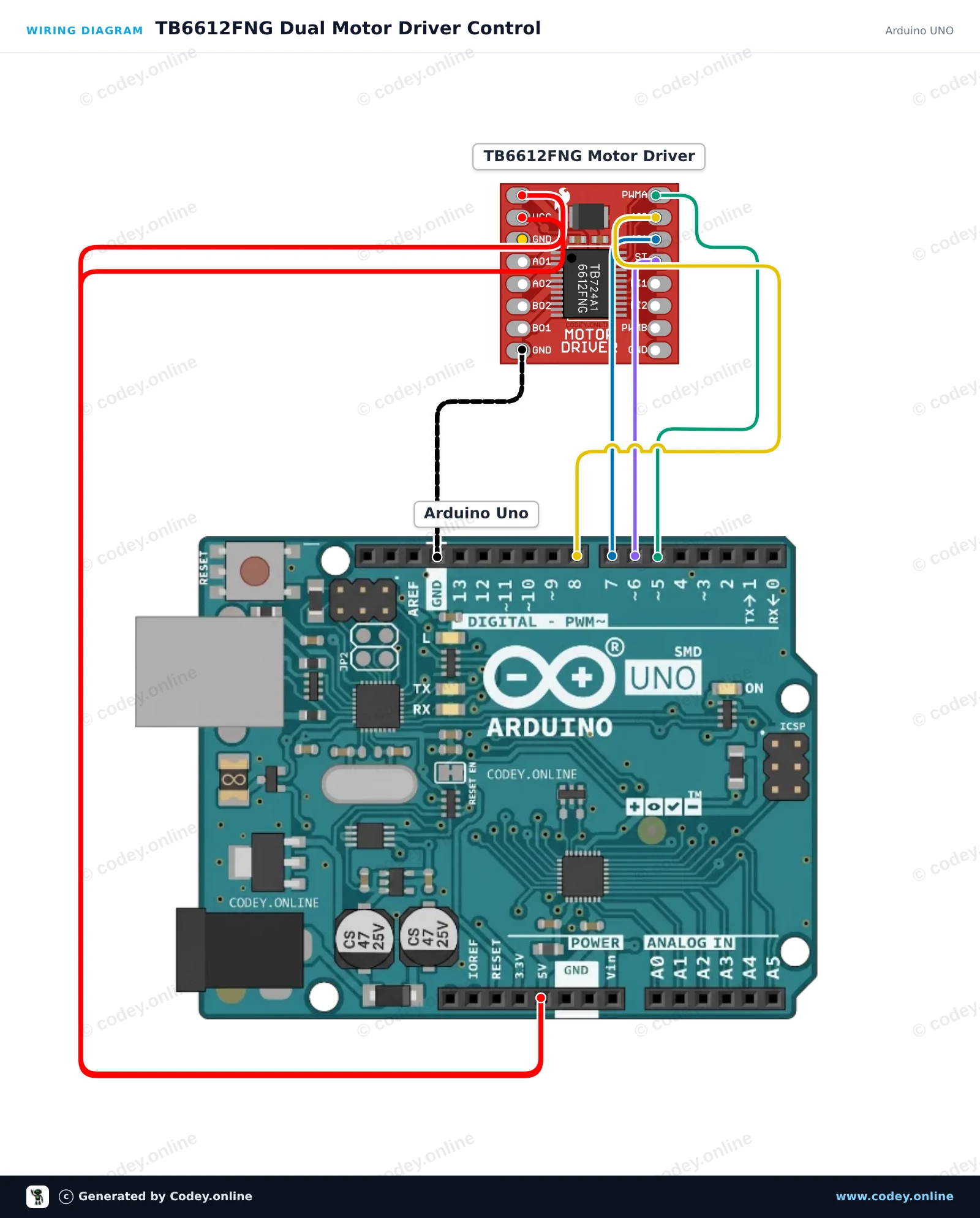
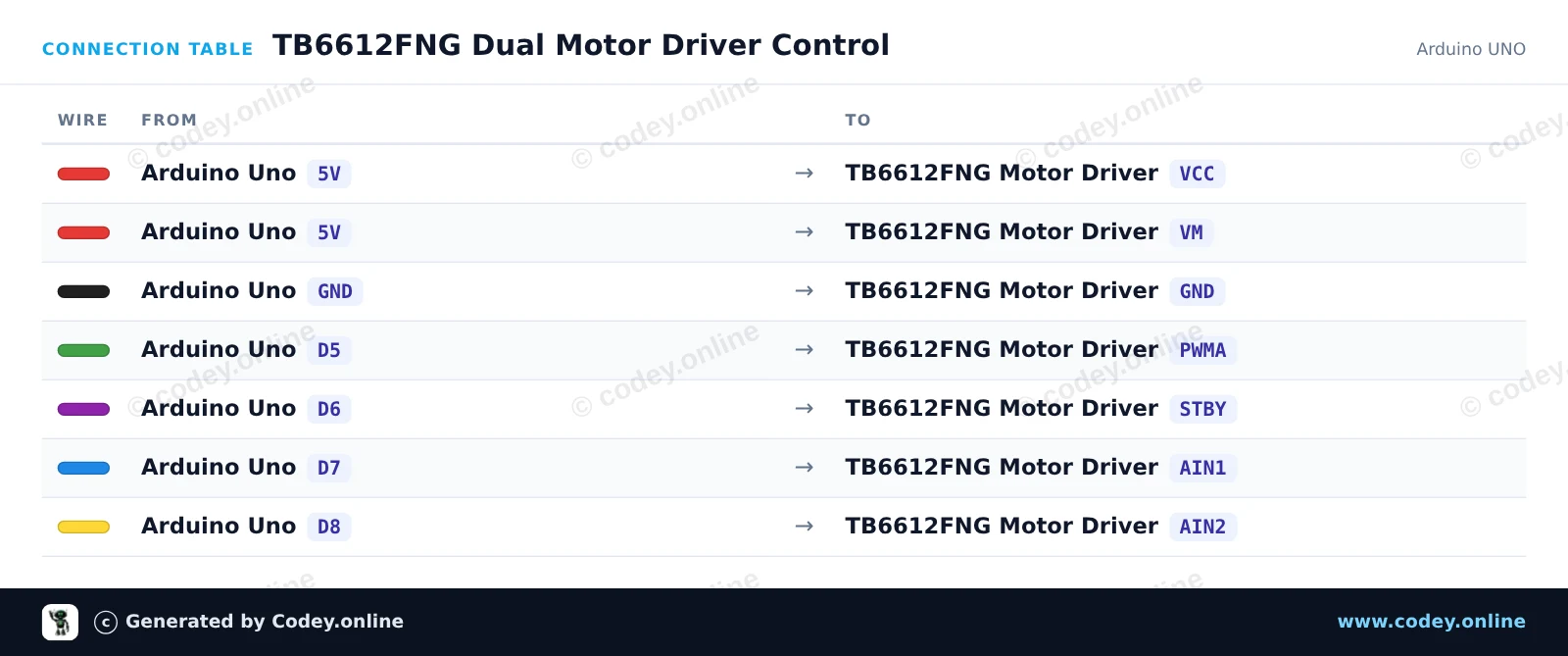
This project controls a DC motor channel using the dual H-bridge TB6612FNG driver. The sketch enables the driver via the standby pin and alternates running the motor forward, stopping, and running in reverse with PWM speed control. Open the Serial Monitor at 115200 baud to observe the operating status.
/*
* ==================================================================
* Generated by Codey.online — https://www.codey.online
* ==================================================================
* Project : TB6612FNG Dual Motor Driver Control
* Board : Arduino UNO (arduino:avr:uno)
* Parts : TB6612FNG Motor Driver
* Libraries : none (built-in)
*
* Codey Online is an AI-powered browser IDE for Arduino and ESP32.
* Describe your project and Codey writes the code, draws the wiring
* diagram and uploads it to your board, straight from the browser.
* This code is free to use, modify and share, without warranty.
* ==================================================================
*/
const int PIN_PWMA = 5;
const int PIN_STBY = 6;
const int PIN_AIN1 = 7;
const int PIN_AIN2 = 8;
void setup() {
Serial.begin(115200);
pinMode(PIN_PWMA, OUTPUT);
pinMode(PIN_STBY, OUTPUT);
pinMode(PIN_AIN1, OUTPUT);
pinMode(PIN_AIN2, OUTPUT);
// Take driver out of standby mode
digitalWrite(PIN_STBY, HIGH);
Serial.println(F("TB6612FNG Motor Driver Initialized"));
}
void driveMotorA(bool forward, int speed) {
speed = constrain(speed, 0, 255);
if (forward) {
digitalWrite(PIN_AIN1, HIGH);
digitalWrite(PIN_AIN2, LOW);
Serial.print(F("Motor Forward at speed: "));
} else {
digitalWrite(PIN_AIN1, LOW);
digitalWrite(PIN_AIN2, HIGH);
Serial.print(F("Motor Reverse at speed: "));
}
analogWrite(PIN_PWMA, speed);
Serial.println(speed);
}
void stopMotorA() {
analogWrite(PIN_PWMA, 0);
digitalWrite(PIN_AIN1, LOW);
digitalWrite(PIN_AIN2, LOW);
Serial.println(F("Motor Stopped"));
}
void loop() {
// Drive forward at speed 200
driveMotorA(true, 200);
delay(2000);
// Stop
stopMotorA();
delay(1000);
// Drive reverse at speed 200
driveMotorA(false, 200);
delay(2000);
// Stop
stopMotorA();
delay(1000);
}
Wiring diagram and example code generated by Codey.online — https://www.codey.online
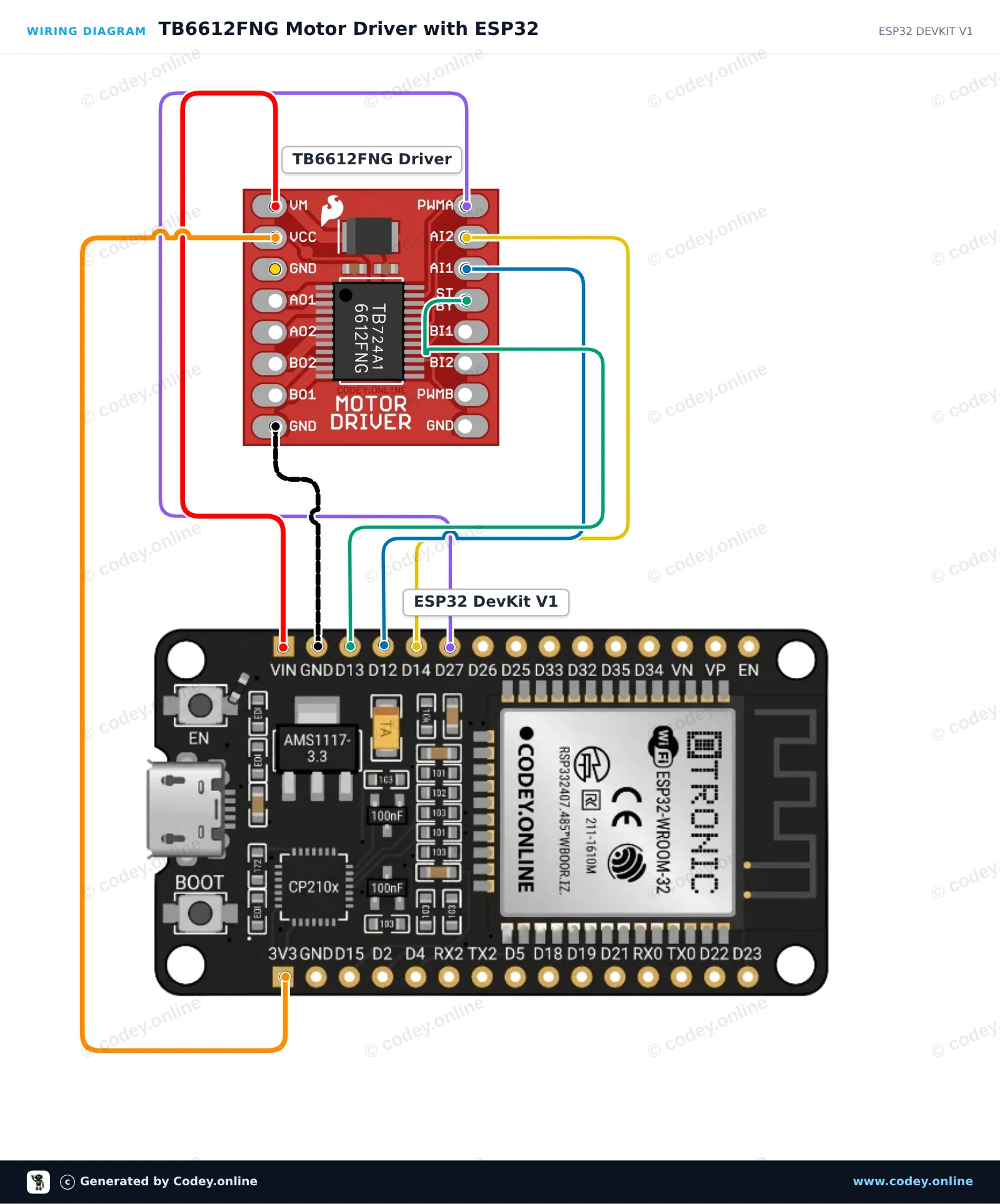
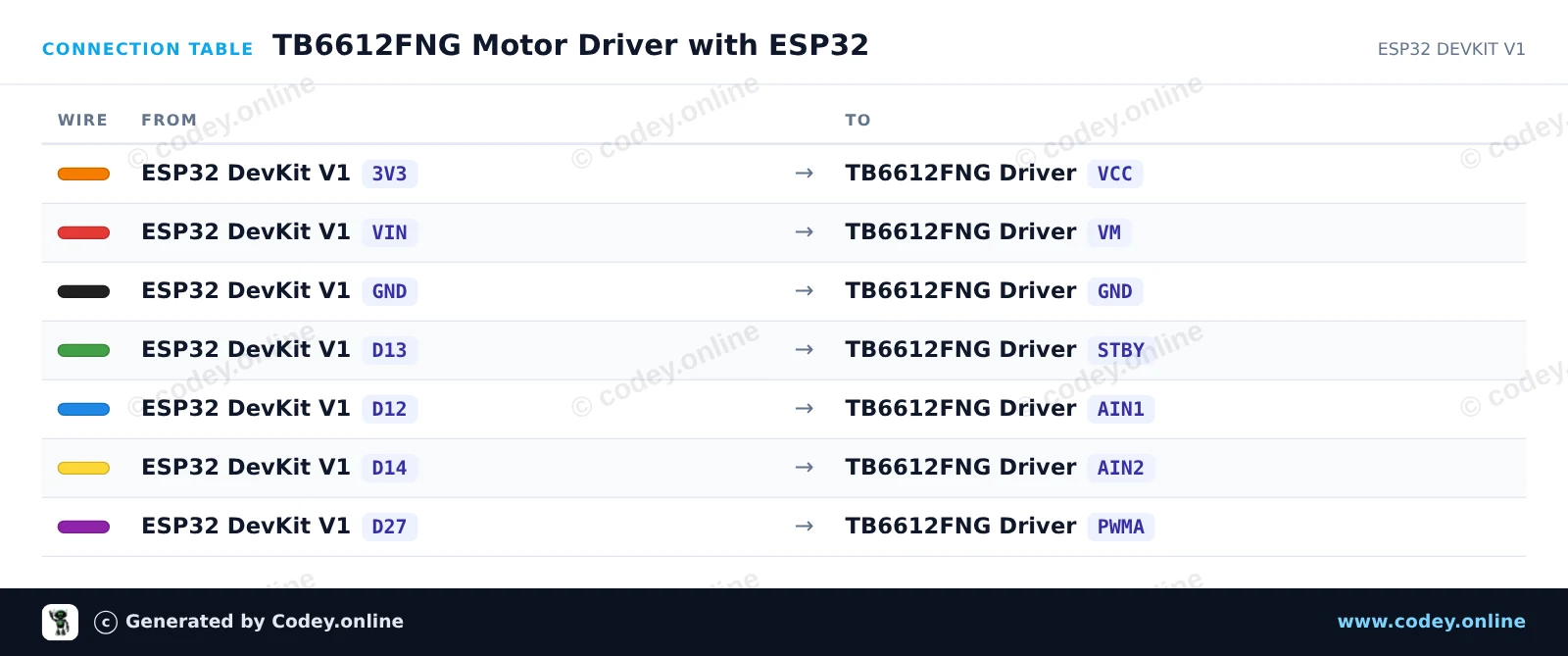
This project demonstrates controlling a DC motor using the TB6612FNG dual H-bridge motor driver and an ESP32. The sketch enables the driver via the STBY pin and cycles motor channel A through forward rotation, deceleration, reverse rotation, and braking. Open the Serial Monitor at 115200 baud to view the current motor state and speed.
/*
* ==================================================================
* Generated by Codey.online — https://www.codey.online
* ==================================================================
* Project : TB6612FNG Motor Driver with ESP32
* Board : ESP32 DEVKIT V1 (esp32:esp32:esp32doit-devkit-v1)
* Parts : TB6612FNG Motor Driver
* Libraries : none (built-in)
*
* Codey Online is an AI-powered browser IDE for Arduino and ESP32.
* Describe your project and Codey writes the code, draws the wiring
* diagram and uploads it to your board, straight from the browser.
* This code is free to use, modify and share, without warranty.
* ==================================================================
*/
// TB6612FNG Dual H-Bridge Motor Driver Demo on ESP32
const int PIN_STBY = 13;
const int PIN_AIN1 = 12;
const int PIN_AIN2 = 14;
const int PIN_PWMA = 27;
void setup() {
Serial.begin(115200);
pinMode(PIN_STBY, OUTPUT);
pinMode(PIN_AIN1, OUTPUT);
pinMode(PIN_AIN2, OUTPUT);
pinMode(PIN_PWMA, OUTPUT);
// Enable driver
digitalWrite(PIN_STBY, HIGH);
Serial.println("TB6612FNG Motor Driver Initialized");
}
void driveMotor(bool forward, int speed) {
if (forward) {
digitalWrite(PIN_AIN1, HIGH);
digitalWrite(PIN_AIN2, LOW);
} else {
digitalWrite(PIN_AIN1, LOW);
digitalWrite(PIN_AIN2, HIGH);
}
analogWrite(PIN_PWMA, constrain(speed, 0, 255));
}
void stopMotor() {
digitalWrite(PIN_AIN1, LOW);
digitalWrite(PIN_AIN2, LOW);
analogWrite(PIN_PWMA, 0);
}
void loop() {
// Forward acceleration
Serial.println("Motor Forward: Accelerating");
for (int spd = 50; spd <= 255; spd += 25) {
driveMotor(true, spd);
delay(150);
}
delay(1000);
// Stop
Serial.println("Motor Stop");
stopMotor();
delay(1000);
// Reverse acceleration
Serial.println("Motor Reverse: Accelerating");
for (int spd = 50; spd <= 255; spd += 25) {
driveMotor(false, spd);
delay(150);
}
delay(1000);
// Stop
Serial.println("Motor Stop");
stopMotor();
delay(2000);
}
Wiring diagram and example code generated by Codey.online — https://www.codey.online
Features:
1. Standby control to save power.
2. CW / CCW / short brake / stop motor control modes.
3. Built-in thermal shutdown circuit and low-voltage detection circuit.
Description:
The TB6612FNG motor driver can drive up to two DC motors with a constant current of 1.2 A (3.2 A peak). Two input signals (IN1 and IN2) can be used to control the motor in one of four operating modes: clockwise, counterclockwise, short brake and stop. The two motor outputs (A and B) can be controlled separately, and the speed of each motor is controlled via a PWM input signal with a frequency up to 100 kHz. The STBY pin must be pulled high to take the motor out of standby mode.
The logic supply voltage (VCC) can be in the range of 2.7-5.5 VDC, while the motor supply voltage (VM) is limited to a maximum of 15 VDC. The output current is rated up to 1.2 A per channel (or up to 3.2 A for a short, single pulse).
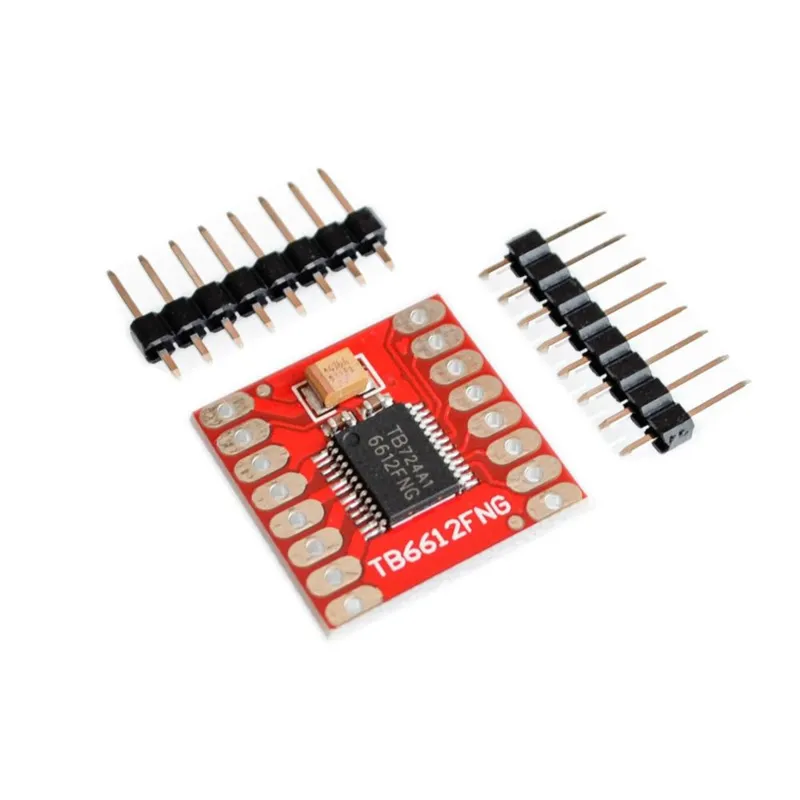
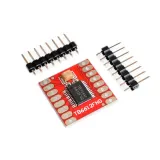
The board is supplied with all components as shown including the header pins.
Specifications:
Supply voltage: VM = 15V max, VCC = 2.7-5.5V
Output current: Iout = 1.2 A (average) / 3.2 A (peak)
Dimensions
Length: 2cm
Width: 2cm
Height: 0.3cm

| Width | 2 cm |
|---|---|
| Length | 2 cm |
| Supply voltage | VM = 15V max, VCC = 2,7-5,5V |
| Frequency | 100 kHz |
| Height | 0,3 cm |
| Output current | Iout = 1,2 A / 3,2 A |
No reviews yet.
Motor driver module TB6612FNG for Arduino